Frequently asked questions
The right reflexes, without panic.
What to do, who to call, and what the law says. If your question is not here, write to us.
I found a stray animal. What should I do?
If the animal is injured or in danger, contact a vet, the gendarmerie or the fire brigade (18). Do not put yourself at risk if the animal seems aggressive. The emergency vet number for Eymet and surrounds is 05 35 56 99 28.
If the animal is identifiable, the owner will be contacted. If not, it will usually be transferred to the pound (fourrière). If the vet or the town hall suggest the pound, please call us or a local rescue association to see if help can be found locally. A foster home is far less distressing for a lost or abandoned animal, and we are usually able to agree with the town hall to take the animal into our care.
Once an animal reaches the pound or an association, there is a mandatory holding period of 8 working days, during which every effort is made to find the owner. If nobody comes forward, the animal may be transferred to a shelter or an association. Animals taken in by Pawprint then go to the vet to be sterilised, microchipped, vaccinated, FIV/FeLV tested, thoroughly checked and behaviourally assessed, before being put up for adoption.
I would like to report animal abuse
What counts as abuse? Neglect (no food, water or shelter), physical abuse, abandonment, or animals kept in dangerous conditions.
Immediate danger: police or gendarmerie 17, fire brigade 18, EU emergency number 112, Animal SOS hotline 3677 (you may be redirected to the gendarmerie). They can intervene if the situation is urgent.
Reporting: to your local town hall (mairie), the Gendarmerie nationale or the Police nationale. Always use the dedicated animal abuse hotline, also online at 3677.fr. Local associations may help too; Facebook Messenger is usually the quickest way to reach one.
Provide the address or location, a description of the animal, and your evidence: photos, videos, dates, witnesses if possible. You can file a formal complaint ("plainte") or make a report ("signalement").
Several organisations investigate and help rescue abused animals: the Société Protectrice des Animaux (SPA), the Fondation 30 Millions d'Amis, the Fondation Brigitte Bardot. Pawprint can help you contact them.
Animal abuse carries serious penalties in France. Under article 521-1 of the Penal Code: up to 3 years in prison, a fine of up to €45,000, and a possible ban on owning animals.
Can I sterilise the stray cats in my area?
Any animal over 7 months old that is not microchipped belongs to the local town hall, which can decide to have it neutered and identified. The law is clear: each commune is responsible for managing its own stray cat population. Since the decree of 3 April 2014, sterilisation campaigns that return cats to where they live must be preferred to systematic collection and transport to the pound. Cats treated this way are given the status of "chats libres", free-roaming cats: they must be fed regularly and any new arrival reported.
In theory, a mayor must now justify any refusal to implement a neutering programme and can no longer refuse help from organisations offering on-the-ground initiatives.
Pawprint works with the communes it has signed an agreement with: Eymet (24) and Saint-Colomb-de-Lauzun (47). Stray cats reported by residents are trapped with the help of volunteers, neutered at partner clinics, and released where they live. The commune covers part of the cost.
We want to extend our agreements and our volunteer team. Becoming a team leader in your commune, reporting a colony, negotiating an agreement with your town hall: get in touch, we would be delighted to hear from you.
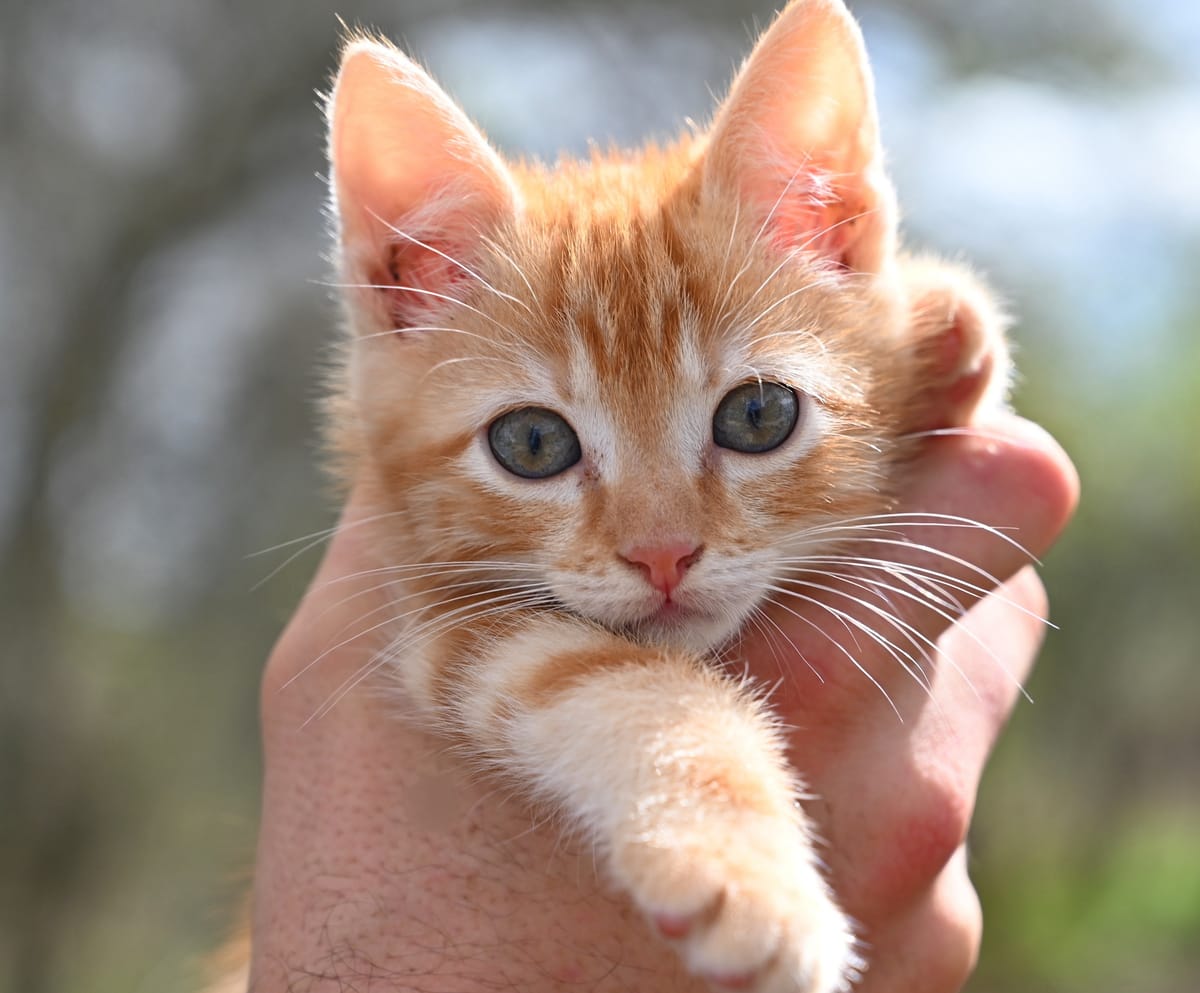
I found a box of kittens: the urgent steps
In a garden, it is very likely that the mother has left them to find food and will come back. Do not disturb them (you can leave food and water nearby for her) and keep watch. If the kittens stay alone for a long time or the mother is clearly not coming back, contact us urgently.
Dumped somewhere dangerous or exposed (a box, a bin), collect them and send us a Facebook message or an e-mail immediately. If you get no reply within 30 minutes, take them to a partner vet for immediate care and ask them to call us.
Kittens cannot regulate their temperature: keep them warm (but not hot). They can only drink specialised kitten milk replacement, available from the vet. Please do not try this without experience: there are precise protocols, and you never feed a cold kitten.
I have lots of land. How about a barn cat?
Yes please, and it is precious. We are looking for people with a big garden, an equestrian yard or a vineyard who could welcome a garden of refuge for sterilised cats born feral, caught in our campaigns or removed from dangerous environments. Fearful and not adoptable, they still need our protection.
Without gardens of refuge we could not help these cats at all, as we have no facility to house them long term. Relocation remains a last resort, because moving a feral cat to a new territory is never trivial.
All it takes is a large enough plot, a little away from busy roads. An outbuilding (barn, garage, shed) lets you keep the cat enclosed for a while so it gets used to the place; once free, it will come back there to sleep and eat. Otherwise, a small weatherproof kennel at the bottom of the garden does the job.
Provide fresh water at all times and meals at fixed hours. For holidays, a big bowl of kibble or kind neighbours will do. A sterilised cat is peaceful: every time you catch sight of it, you will know you saved its life.
I want to rehome my pet
We receive dozens of requests to rehome pets from people facing a job change, a major life event, a divorce. We cannot take on every animal we are asked to help: there are simply too many.
If there is any way to help you keep your pet, we would be happy to: please ask us. If you are determined to surrender it, submit a request on Patte-forme.
Before taking in a surrendered animal, we normally ask that it is sterilised, up to date with vaccinations, microchipped, wormed and parasite treated. We check the health record and the microchip details. Include as much as you can about its history and behaviour, why you are surrendering it, and at least three good-quality photos.
A surrender fee of €150 applies in most cases.
A question, an animal in distress?
Write to us. We answer as fast as we can.
In an emergency, call the on-duty vet for Eymet and the surrounding area. 05 35 56 99 28